

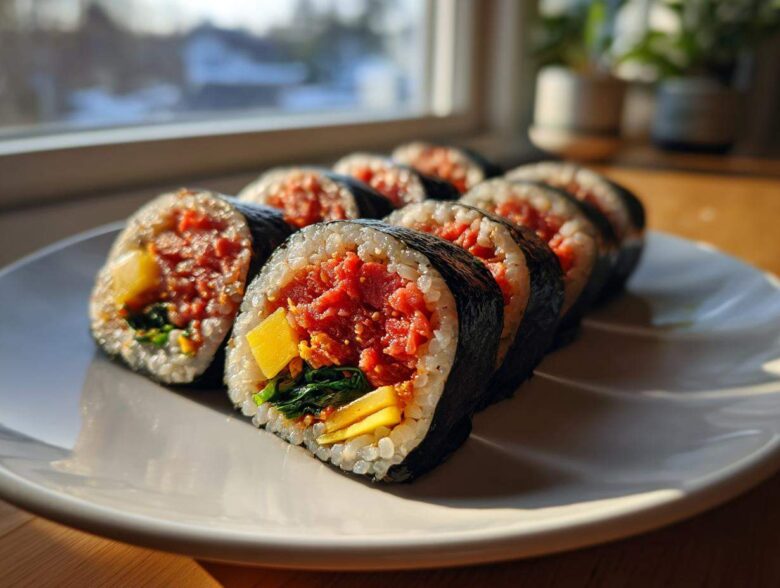
Oh my goodness, are you craving Korean takeout *right now*? I totally get it! Sometimes you just need that perfect salty, savory hit, but honestly, the store-bought versions of tuna kimbap always leave me wanting more filling and fewer giant bites of plain rice. That’s why I finally perfected my own recipe! This version is lightning fast—we’re talking an easy, 15-minute meal miracle—and the spicy filling I use? It’s got just the right kick. Seriously, once you nail this creamy, spicy tuna mix, you’ll never go back to those bland little rolls again. I spent way too long testing the perfect mayo-to-sriracha ratio, and trust me, the results are worth it. Check out my culinary journey—it finally led me here!
Why This Homemade Spicy Tuna Kimbap Beats Store-Bought (EEAT Focus)
Listen, buying kimbap is convenient, but your flavor satisfaction goes way down when you bring it home. When you make Chamchi Kimbap Homemade, you’re taking control of the quality, and that makes all the difference! Nothing beats the taste of fresh ingredients carefully layered over perfectly seasoned rice.
Here’s why my method wins every single time compared to those commercial rolls:
- The Filling is King: You get a delicious, generously sized spoonful of spicy tuna filling, not just a tiny smear.
- Rice Control: We season every grain of rice slightly with sesame oil and salt. Store-bought rice is usually pretty bland!
- Texture Check: You control how dry or moist the veggies are, meaning no soggy bottoms on your rolls!
This recipe is really about elevating simple ingredients through technique and quality shopping.
Achieving the Perfect Flavor Balance in Your Tuna Kimbap
The secret weapon here is the mayo—you absolutely must use Kewpie mayonnaise if you can find it! It’s richer and tangier than standard American mayo, which creates this incredible, luxurious base for the tuna. Then, we bring in the heat with Sriracha or Gochujang. That perfect sweet-spicy-creamy mix is what makes the filling sing. It coats everything beautifully, so you get that exciting little flavor burst in every single bite of your tuna kimbap.
Essential Ingredients for Authentic Tuna Kimbap
Okay, gather your crew! Before we jump into rolling these amazing Korean seaweed rolls, let’s talk ingredients. For kimbap, precision matters, especially when it comes to measurements, because wet ingredients can totally sabotage your roll later on. Make sure your tuna is drained so well it squeaks! And the pickled radish—we need those sturdy, thin strips. Don’t skip the perilla leaves (kkaennip) if you can find them; they give that wonderfully authentic, slightly herbal layer that really takes these tuna kimbap rolls to the next level. Keep everything prepped beforehand so the assembly goes smoothly!
Ingredient Notes and Substitutions for Your Tuna Kimbap
Rice choice is critical here; you simply must use short-grain rice, like sushi rice. You need that sticky quality so your roll holds together when you slice it. If you absolutely cannot find *danmuji* (the yellow pickled radish), a good substitute for crunch is a few very thin strips of cucumber that you’ve pressed hard between paper towels to pull out the water. Also, warming your rice slightly before mixing in the oil and salt helps it absorb the seasoning better. Never use cold rice, or it will crumble on you!
How to Prepare the Quick Tuna Kimbap Filling (No-Cook Tuna Kimbap Filling)
This is where the magic happens fast! Remember, we’re aiming for that fantastic 15 Minute Meal Korean vibe, so no cooking required for this center filling. Grab that can of tuna, but please, drain it really, really well. I mean it—press that lid down hard and squeeze out every last drop of water! Watery tuna equals soupy filling, and that will just soak our beautiful seaweed wrapper, making your tuna kimbap tear apart the second you try to slice it. Oops!
In your bowl, just toss in the well-drained tuna, the Kewpie mayo, your spice of choice, sugar, sesame seeds, and garlic powder. Mix it up until it looks like a glorious, uniform paste. It should be thick enough that you can heap it onto the seaweed without it immediately sliding off the sides. See? That was quick! This creamy, savory filling is ready to go right now, saving you loads of time.
Step-by-Step Spicy Tuna Kimbap Tutorial for Perfect Rolls
Alright, grab your bamboo mat! This is the most satisfying part of the whole process, and if you follow these directions closely, you’ll ace this Spicy Tuna Kimbap Tutorial. First things first: we need to dress our rice. Take your warm, seasoned rice and spread an even, thin layer over about three-quarters of the seaweed sheet, shiny side down. Don’t press it hard; just gently coax it into position, leaving that top edge bare—that bare strip is our seal!
Next, you pile on the fillings! Line your spicy tuna mixture right down the center. Then, arrange your carrot, spinach, and pickled radish strips neatly next to the filling. If you’re using those amazing perilla leaves, pop one down first, right over the tuna. Now we roll! Remember, we want this tight so it holds its shape later.
Mastering the Kimbap Rolling Technique
This is where the magic happens with your bamboo mat. Lift the edge closest to you and fold it right over the ingredients, using the mat to tuck that front edge of the seaweed underneath itself. Press down gently but firmly—you want compact layers, not squished mush! Keep rolling forward, peeling the mat away as you go. When you reach that final bare strip, just dab a tiny bit of water on it and finish the roll. That little bit of moisture seals it shut beautifully!
Slicing Your Tuna Kimbap Neatly
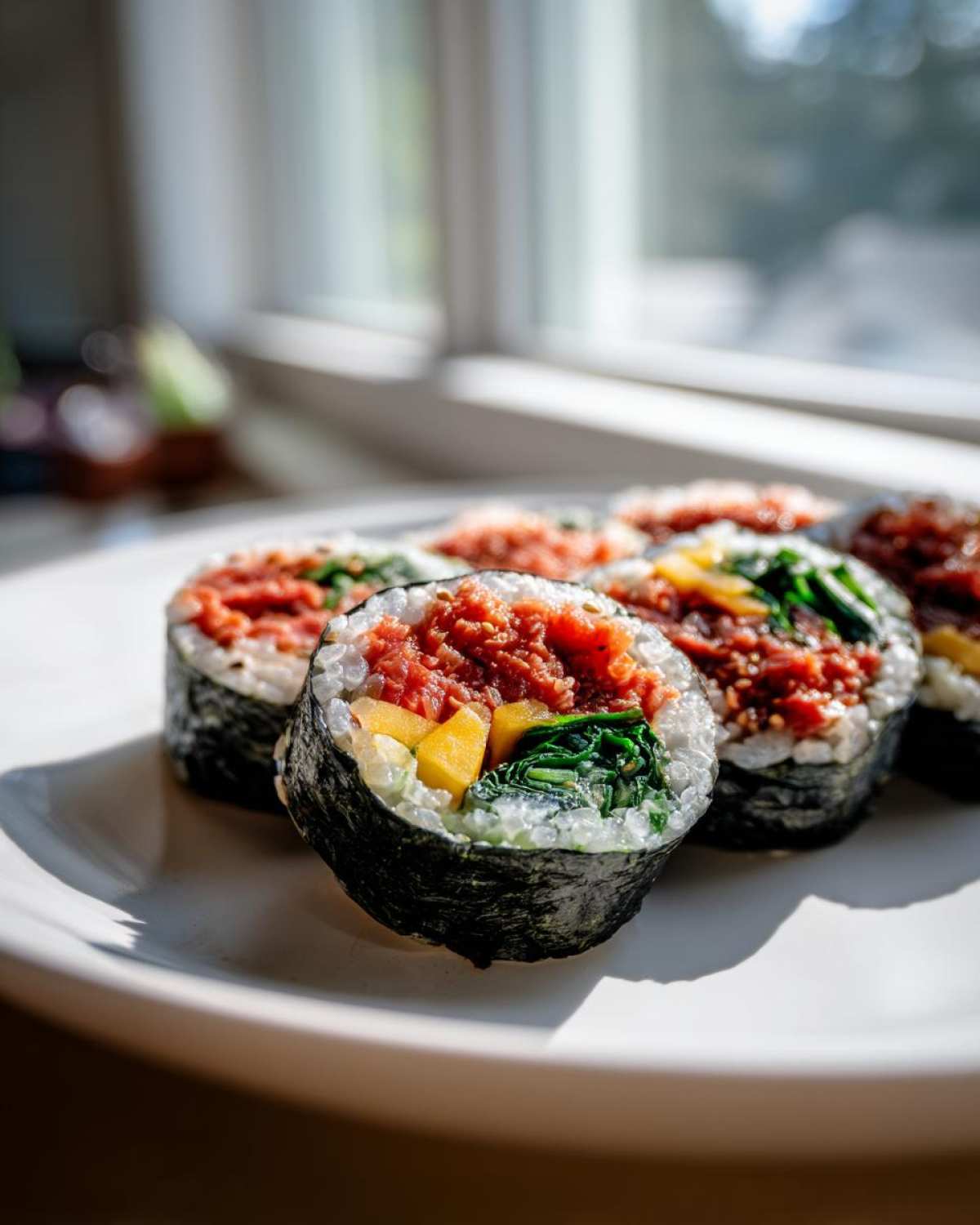
You’ve made a perfect log, but you can’t just hack at it with a dull butter knife! That’s a recipe for disaster and ripped seaweed. Use your sharpest knife, and here’s the pro tip: dip the blade in water or run it under the faucet and wipe it clean before *every single cut*. This prevents the sticky rice from dragging and tearing the nori. Slice it into neat, one-inch pieces, and you’ll see those gorgeous, colorful layers!
This whole assembly process is fun, and you can find some great tips on knife safety if you need a refresher!
Tips for Success When Making Tuna Kimbap at Home
Making amazing tuna kimbap at home is less about a secret ingredient and more about controlling the elements! The absolute biggest rookie mistake I see people make is forgetting about moisture. Remember those vegetables? Your blanched spinach needs a serious squeeze until it feels almost dry. Water is the enemy of a tight roll, trust me!
Also, don’t forget the rice temperature! You want it slightly warm, not piping hot, when you mix in your sesame oil and salt. If it’s too hot, it steams the seaweed and makes it tough. If it’s too cold, it won’t stick evenly. Getting that gentle warmth is crucial for uniform distribution across the sheet for your beautiful Korean seaweed rolls. Follow these small steps, and you’ll have professional-looking rolls every time!
Serving Suggestions for Your Korean Seaweed Rolls
Now that you’ve got these gorgeous Korean seaweed rolls ready, what do you serve them with? Kimbap is fantastic all on its own for a super Quick Kimbap Lunch Idea, but I always have a little dipping sauce ready! I just mix a dash of soy sauce with a tiny bit of rice vinegar and maybe a sprinkle of toasted sesame seeds on top. If you’re feeling fancy, a little bit of pickled ginger alongside is perfect for cutting through the richness of that spicy tuna filling.
These really shine when you cut them up! They look so colorful on a platter, making them ideal for spontaneous gatherings. They are total lifesavers for Party Finger Foods Korean Style because everyone can just grab a piece without needing plates or cutlery. Seriously, watch them disappear fast when you put these out!
Storage and Make Ahead Lunchbox Korean Food Tips
I know you want to make these rolls ahead of time, and honestly, the filling is the best part to prep in advance! You can whip up the spicy tuna filling the day before and keep it sealed tight in the fridge. That makes assembling your tuna kimbap the next morning super fast—perfect for those busy mornings when you need a great Make Ahead Lunchbox Korean Food solution.
Now, the whole roll? Kimbap is always best eaten the *day* you make it. The seaweed (gim) absorbs too much moisture from the rice and fillings once it sits overnight, and it can get chewy, which ruins the texture. If you must store leftovers, put them in an airtight container, but don’t bother reheating them; they just won’t taste right. If you need to contact me with questions as you pack your lunches, here’s the link to my contact page!
Frequently Asked Questions About Tuna Kimbap
I always get a million questions when people try making kimbap for the first time, so let’s clear up the biggest concerns about making these Authentic Korean Rolls at home!
Is Tuna Kimbap the same thing as sushi?
Nope, they are definitely cousins, but not twins! The biggest difference is the rice seasoning. Sushi rice uses vinegar, sugar, and salt, giving it that bright, tangy flavor. For our tuna kimbap, we season the rice only with sesame oil and salt, which makes it savory, not sour. Plus, kimbap usually includes cooked or pickled ingredients like spinach and radish, while traditional sushi focuses on raw fish.
How do I stop my Kimbap Rice from getting hard in the fridge?
This is common! Because we season the rice with oil, it helps slow down the staling process, but it won’t stop it completely. The best way to store leftover Chamchi Kimbap is absolutely airtight. Better yet, make the filling ahead of time—that’s much safer for texture. If you do have leftovers, eat them within 24 hours, or just enjoy them cold; reheating kimbap tends to make the seaweed tough.
Can I substitute the tuna with another filling?
Of course! You can absolutely swap out canned tuna for canned salmon or even shredded cooked chicken to make a different kind of savory roll. Just make sure whatever meat you use is super well-drained and mix it with the exact same spicy mayonnaise binder we used in this recipe. It’s the binder that holds everything together!
What’s the key to perfectly layered, non-soggy rolls?
This goes back to preparation! You have to squeeze *everything* dry. Squeeze the canned tuna, squeeze the blanched spinach until no water drips out, and use firm pickled radish strips, not watery cucumbers. Also, don’t overload the roll! A thin, even layer of filling across the center keeps the weight balanced and prevents stress on the seaweed wrapper. I learned that the hard way!
If you’re curious about the specifics of our ingredient sourcing, you can check out our site policies if you ever need more background information.
Estimated Nutritional Data for Tuna Kimbap
Now, I always tell people not to stress too much about the exact numbers when you’re having fun cooking, but knowing the basics is helpful, especially if you’re planning these for a family lunch or meal prep! Remember, these numbers are just my best estimate based on the exact ingredients and portion sizes I listed above. Since we are using canned tuna packed in water and lots of fresh veggies, this recipe for tuna kimbap comes out surprisingly light, which I love!
This breakdown is for one serving size, which I defined as 6 bite-sized pieces of the roll:
- Serving Size: 6 pieces
- Calories: Approximately 350
- Fat: 12g Total Fat (Only about 2g of that is saturated fat, which is great!)
- Carbohydrates: 45g (Most of this comes from the delicious rice!)
- Protein: 18g (Hello, quick protein boost!)
- Fiber: 2g
- Sugar: About 4g (Mostly from the pickled radish and a tiny bit added to the filling—no excessive sugars here!)
- Sodium: 450mg (This can vary depending on how salty your seaweed wrapper is, so watch that!)
See? A very satisfying and relatively well-balanced snack or light lunch! It proves that homemade kimbap can definitely fit into a healthy eating plan. Bon appétit!
PrintEasy Spicy Tuna Kimbap (Chamchi Kimbap)
Make quick, flavorful homemade spicy tuna kimbap that tastes better than store-bought versions. This recipe focuses on a fast, savory filling and simple rolling technique.
- Prep Time: 15 min
- Cook Time: 0 min
- Total Time: 15 min
- Yield: 4 rolls (approx. 24 pieces)
- Category: Main Course
- Method: Rolling
- Cuisine: Korean
- Diet: Low Fat
Ingredients
- 4 sheets roasted seaweed (gim/nori)
- 3 cups cooked short-grain white rice, slightly warm
- 1 tablespoon sesame oil (for rice)
- 1 teaspoon salt (for rice)
- 1 (5 oz) can tuna in water, drained well
- 3 tablespoons Kewpie mayonnaise
- 1 tablespoon sriracha or gochujang (adjust to heat preference)
- 1 teaspoon sugar
- 1 teaspoon toasted sesame seeds
- 1/2 teaspoon garlic powder
- 1/2 cup shredded carrot
- 1/2 cup yellow pickled radish (danmuji), cut into strips
- 1/2 cup spinach, quickly blanched and squeezed dry
- 4 sheets perilla leaves (optional, for authentic flavor)
Instructions
- Prepare the rice: In a large bowl, mix the warm rice with sesame oil and salt until evenly coated. Set aside.
- Make the spicy tuna filling: In a separate bowl, combine the drained tuna, mayonnaise, sriracha (or gochujang), sugar, sesame seeds, and garlic powder. Mix until fully combined into a paste.
- Prepare the vegetables: Ensure the carrots are thinly sliced or shredded, the pickled radish is cut into thin strips, and the blanched spinach is squeezed completely dry to prevent soggy kimbap.
- Assemble the roll: Lay one sheet of seaweed, shiny side down, on a bamboo rolling mat. Brush a thin, even layer of seasoned rice over about 3/4 of the seaweed, leaving the top edge bare.
- Layer the fillings: Place a line of the spicy tuna mixture across the center of the rice. Arrange thin strips of carrot, pickled radish, and spinach next to the tuna. If using, place a perilla leaf over the fillings.
- Roll the kimbap: Lift the edge of the mat closest to you and fold it over the fillings, tucking the edge of the seaweed under the ingredients. Press gently to compact the roll.
- Continue rolling tightly, pulling the mat away as you go, until you reach the far edge. Lightly moisten the bare edge of the seaweed with water to seal the roll.
- Brush the finished roll lightly with a mixture of sesame oil and a few sesame seeds.
- Slice the roll into bite-sized pieces (about 1 inch thick) using a sharp, slightly moistened knife. Repeat with remaining ingredients.
Notes
- For a quick lunchbox meal, you can prepare the tuna filling a day ahead and store it in the refrigerator.
- If you prefer a less spicy version, substitute gochujang with a small amount of ketchup mixed with a dash of chili powder.
- Wipe your knife clean and moisten it between cuts to get clean slices of kimbap.
Nutrition
- Serving Size: 6 pieces
- Calories: 350
- Sugar: 4
- Sodium: 450
- Fat: 12
- Saturated Fat: 2
- Unsaturated Fat: 10
- Trans Fat: 0
- Carbohydrates: 45
- Fiber: 2
- Protein: 18
- Cholesterol: 30