

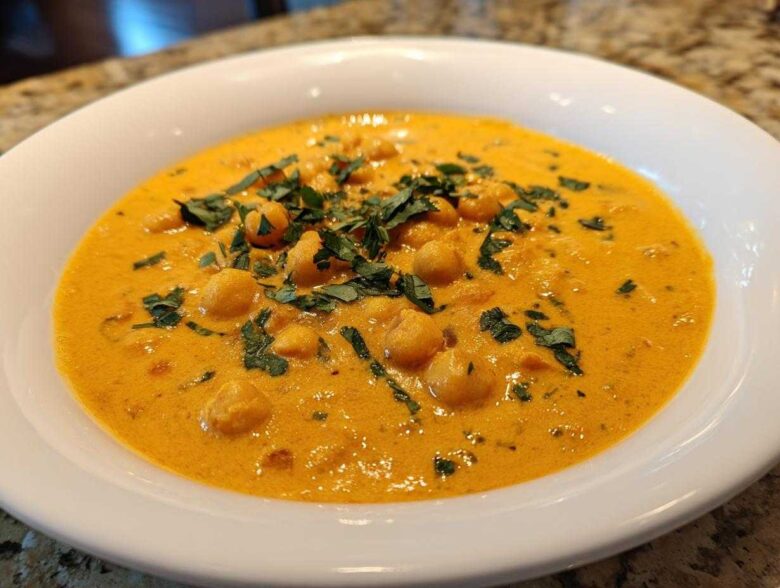
Oh, I totally get it. Some nights you crave that rich, comforting food, but you don’t have two hours to stand over the stove, right? When I need something truly satisfying that doesn’t involve meat, I skip the complicated steps and go straight to my ultimate backup: the Vegetarian Chickpea Curry with Coconut Milk. Trust me, this recipe is magic. It’s so creamy thanks to that wonderful coconut milk, and the depth of flavor that comes from just a few pantry spices completely blows those bland weeknight dinners out of the water.
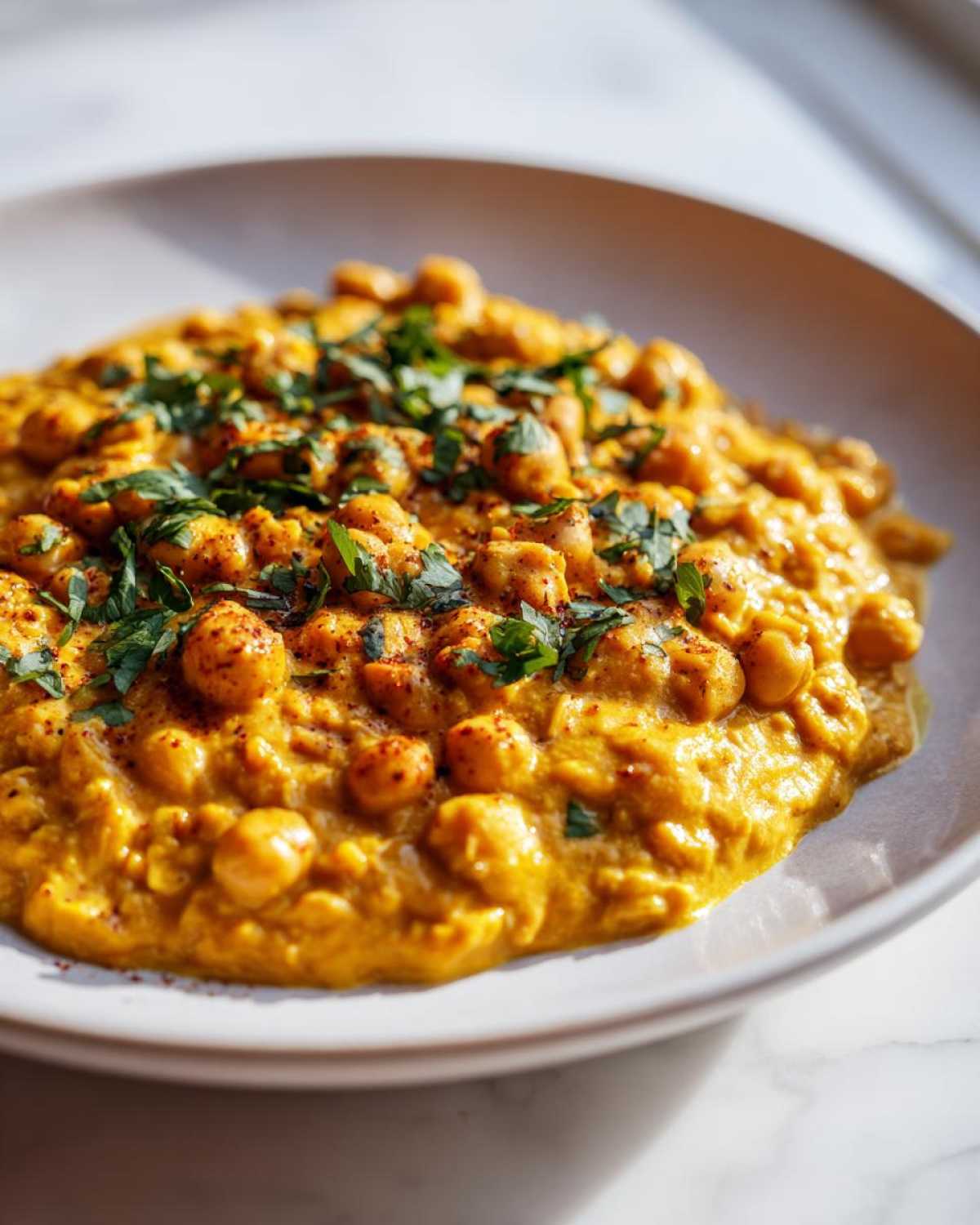
I’ve practiced this recipe countless times, tweaking the spices until it hits just the right spot—it’s ready in under 40 minutes! It’s quick, completely meatless, and delivers that hug-in-a-bowl feeling every single time. If you’re looking for the definitive, easy-to-master recipe for a rich chickpea curry, you’ve finally found it. You should check out my tips on [other vegetable curry variations] too, but this one always wins when I need speed and flavor!
Why This Vegetarian Chickpea Curry with Coconut Milk Shines
Seriously, what’s not to love? This recipe isn’t just another pot on the stove; it’s a solution to the eternal “what’s for dinner?” problem. It pulls triple duty for me as something incredibly easy vegetarian curry, something totally weeknight-friendly, and something that feels like true comfort food.
- Total time is right around 35 minutes—I told you it was fast!
- It’s packed with flavor without needing a grocery store trip for weird ingredients.
- It proudly checks all the boxes: Vegetarian, Vegan, and just plain awesome.
- You get that rich, velvety texture that makes you forget you aren’t eating heavy cream. It’s my favorite kind of healthy vegetarian comfort food.
Gathering Ingredients for Your Coconut Milk Chickpea Recipe
Okay, let’s get down to business! The great thing about this Vegetarian Chickpea Curry with Coconut Milk is that most of this is coming straight from your pantry. That’s why it’s such a reliable recipe for me when time is ticking. We’re looking at a total time commitment of about 35 minutes—10 for prep and only 25 for cooking, which is fantastic!
You’ll want to make sure you grab the full-fat coconut milk, please! Light coconut milk just won’t give you that luxurious, thick texture we’re aiming for. Also, remember the chickpeas need to be rinsed and drained well; we don’t want any of that starchy liquid hanging around. Here’s exactly what you need to pull together this creamy chickpea stew.
- 1 tablespoon coconut oil (go ahead and use the real stuff!)
- 1 large onion, chopped (don’t be shy, this is our flavor base)
- 2 cloves garlic, minced
- 1 tablespoon fresh ginger, grated (fresh makes a huge difference here, seriously)
- 1 teaspoon ground cumin
- 1 teaspoon ground coriander
- 1/2 teaspoon turmeric powder (for that beautiful golden color)
- 1/4 teaspoon cayenne pepper (only if you like a little kick—you can skip it!)
- 1 (14.5 ounce) can diced tomatoes, undrained
- 1 (13.5 ounce) can full-fat coconut milk
- 2 (15 ounce) cans chickpeas, rinsed and drained
- 1 teaspoon salt, or to taste (always taste at the end!)
- 1/2 teaspoon garam masala
- 2 tablespoons fresh cilantro, chopped (for tossing on top right before serving)
Step-by-Step Guide: How to Make Vegetarian Chickpea Curry with Coconut Milk
This is where the magic really happens! Honestly, making a stunning Vegetarian Chickpea Curry with Coconut Milk isn’t about complicated techniques; it’s about timing your layers of flavor correctly. We’re using a simple Dutch oven here, but honestly, any large, heavy pot works just fine. Just follow these steps, and you’ll have a fantastic meal in no time.
- First things first, get your coconut oil hot in that big pot over medium heat. We want it shimmering lightly.
- Toss in your chopped onion. I cook these down until they get soft and translucent, about 5 minutes. This sweetens the base, so don’t rush it!
- Now toss in the garlic and grated ginger. Oh my gosh, stop for one minute and just smell that! That only needs about a minute because if you burn the garlic, the whole thing tastes bitter. We want fragrant, not scorched.
Building the Aromatic Spice Base for Your Flavorful Chickpea Dish
This next part is the secret to why our curry tastes so rich and seems like it cooked all day. Right after the ginger and garlic, you want to immediately stir in your cumin, coriander, turmeric, and that little pinch of cayenne if you’re using it. You only cook these dry spices for about 30 seconds! I call this ‘blooming’ the spices. It means the heat and the oil pull all the flavorful oils out of those ground spices, making them much more intense than if you just dumped them into liquid. Be quick; constant stirring is key!
Once those spices smell incredible—and they will smell amazing—pour in your can of diced tomatoes, making sure you get all that tomato juice in there, too. Then, slowly pour in the full-fat coconut milk and bring the whole happy mess up to a gentle simmer.
- Once it’s simmering gently, add your rinsed and drained chickpeas and your initial teaspoon of salt. Give it a good stir to make sure everything is coated nicely in that creamy tomato sauce.
Simmering the Vegetarian Chickpea Curry with Coconut Milk
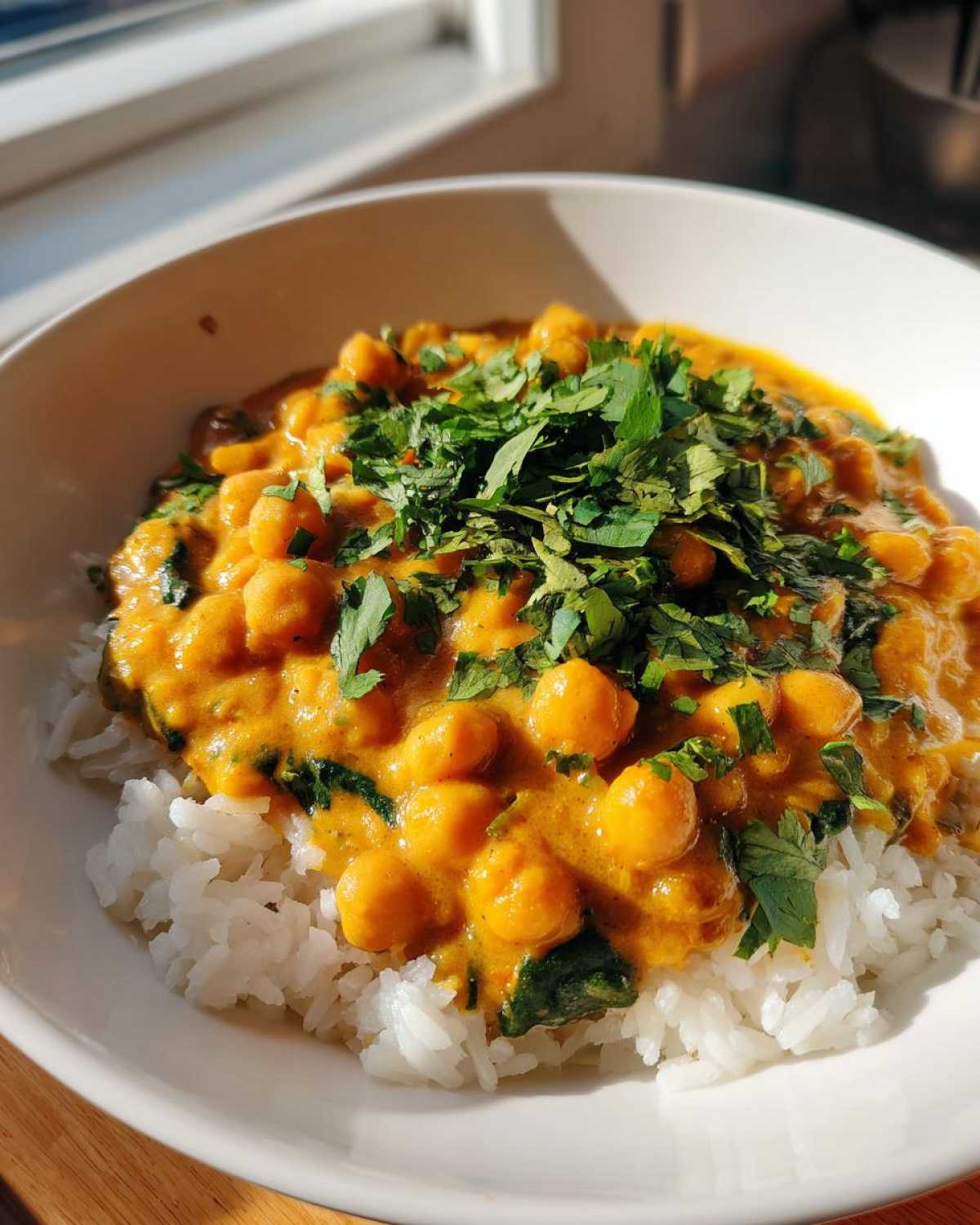
Now we wait! Reduce your heat way down so it’s just gently bubbling—a very lazy simmer. We cover the pot just partially and let this sit for a full 15 minutes. This is crucial because it gives the chickpeas time to soak up all that wonderful coconut, tomato, and spice flavor. If you skip this step, the spices stay on the surface, and the chickpeas taste bland. After those 15 minutes, stir in your final dash of garam masala. I always add this at the very last minute because if you cook it too long, that beautiful, complex aroma fades away. Give it a final taste test for salt, garnish with your cilantro, and you are done! This amazing vegetarian chickpea curry is ready!
Expert Tips for the Best Creamy Chickpea Stew
Getting this Creamy Chickpea Stew dialed in is all about paying attention to the liquid and the simmer time. Everyone asks me about the coconut milk, and I’m going to tell you straight up: skip the ‘light’ version unless you absolutely must. Light coconut milk waters down the entire masterpiece. You need that high fat content from the can to create that velvety, luscious mouthfeel. It’s non-negotiable for the best result!
If, after the 15-minute simmer, you find your stew hasn’t thickened quite enough for your preference—maybe you added a little too much tomato juice—don’t panic! I sometimes do this if my tomatoes were runnier than usual. Just take the lid almost all the way off for the last five minutes. Letting that steam escape concentrates everything beautifully. It thickens up fast, so watch it closely! This little trick ensures every spoonful is packed with flavor, just like my favorite flavorful chickpea dish variations I make.
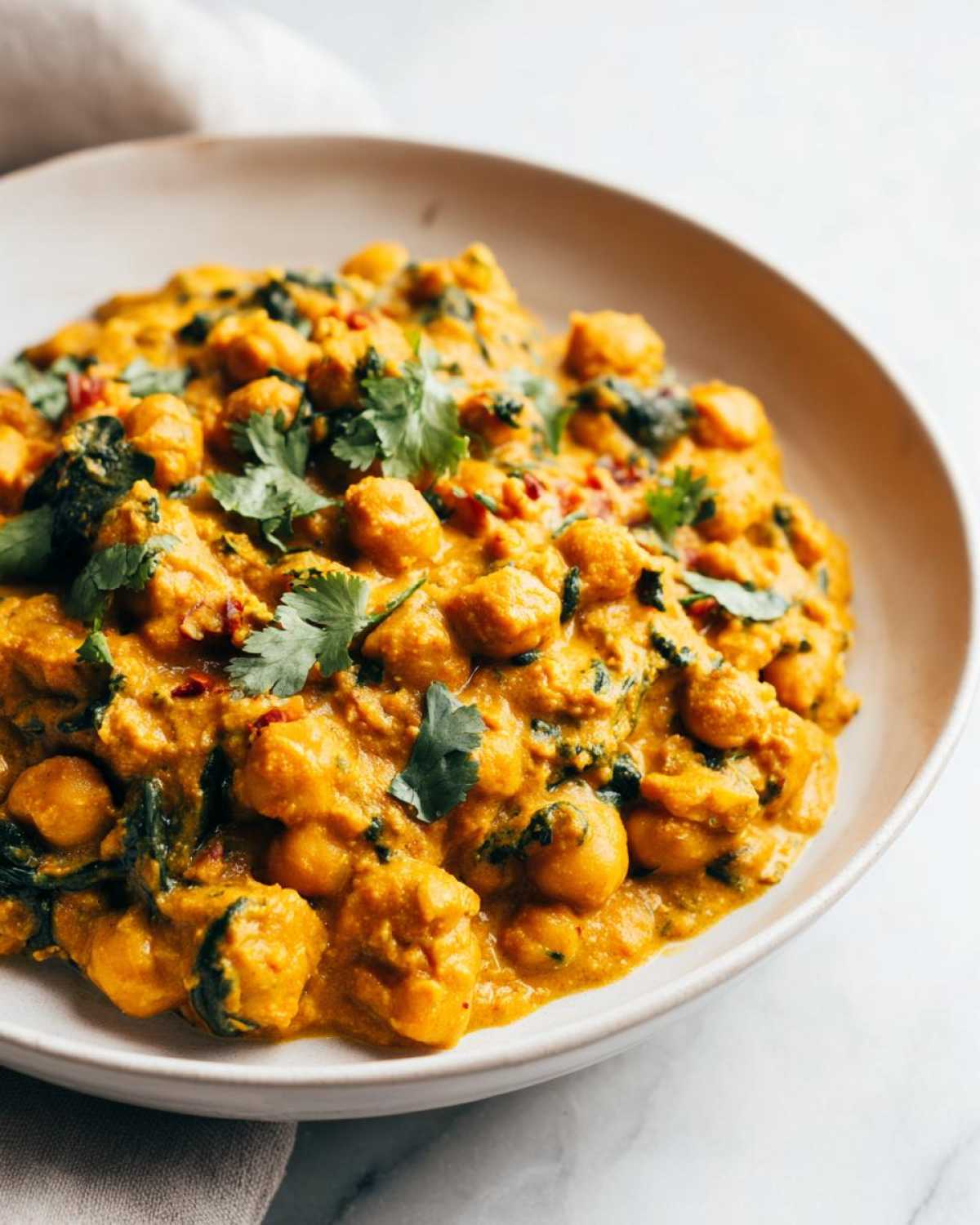
Also, don’t forget you can always sneak in extra veggies here! If I have frozen spinach or a forgotten sweet potato half, I toss it in when the chickpeas go in, and the stew just handles it. It’s such a forgiving, amazing meal.
Ingredient Notes and Substitutions for this Indian Inspired Curry
I love that this recipe feels like a framework you can adapt on the fly based on what you have in the fridge. Part of what makes it such a reliable Indian inspired curry is its flexibility, even if we keep the core spices constant. But sometimes you need a swap, and that’s okay!
Ginger is one of those ingredients that, once you run out, suddenly everything tastes flat without it. If you’re fresh out of real ginger, you can sometimes substitute about half the amount using dried ground ginger, but you have to bloom it *really* well with the other spices. Otherwise, it tastes dusty. If you’re truly desperate and don’t have dried, skip it, but know you’re missing that sharp, bright note.
As for heat, the cayenne pepper is purely optional. I usually leave it out for the kids, but if I’m making this just for us, I sometimes double it, or I’ll swap it out entirely for a teaspoon of red chili powder, which gives a deeper, earthier heat rather than just the sharp burn of cayenne. Experimentation is fun here!
Remember those vegetable additions I mentioned? If you’re throwing in sweet potato, you need to add it right after the tomatoes and coconut milk go in (Step 5), because sweet potatoes need that simmering time to get truly soft. Spinach, whether fresh or frozen, is super easy. Just toss it in during the final 5 minutes of cooking. It wilts down immediately and adds great color and nutrition without messing up your texture at all.
Serving Suggestions for Your Vegetarian Chickpea Curry with Coconut Milk
This flavorful chickpea dish is just begging to be eaten with something substantial underneath it, which is why I almost always have rice or naan bread on hand. This recipe makes for such a satisfying quick vegan dinner when you pair it right!
My number one choice is fluffy basmati rice. Get that rice going while you’re simmering the curry—the natural sweetness of the basmati really balances the spices. If you’re serving it up for company, I love warming up some chewy garlic naan bread. You can use that bread to scoop up every last bit of that creamy sauce. Seriously, don’t let any of that sauce go to waste!
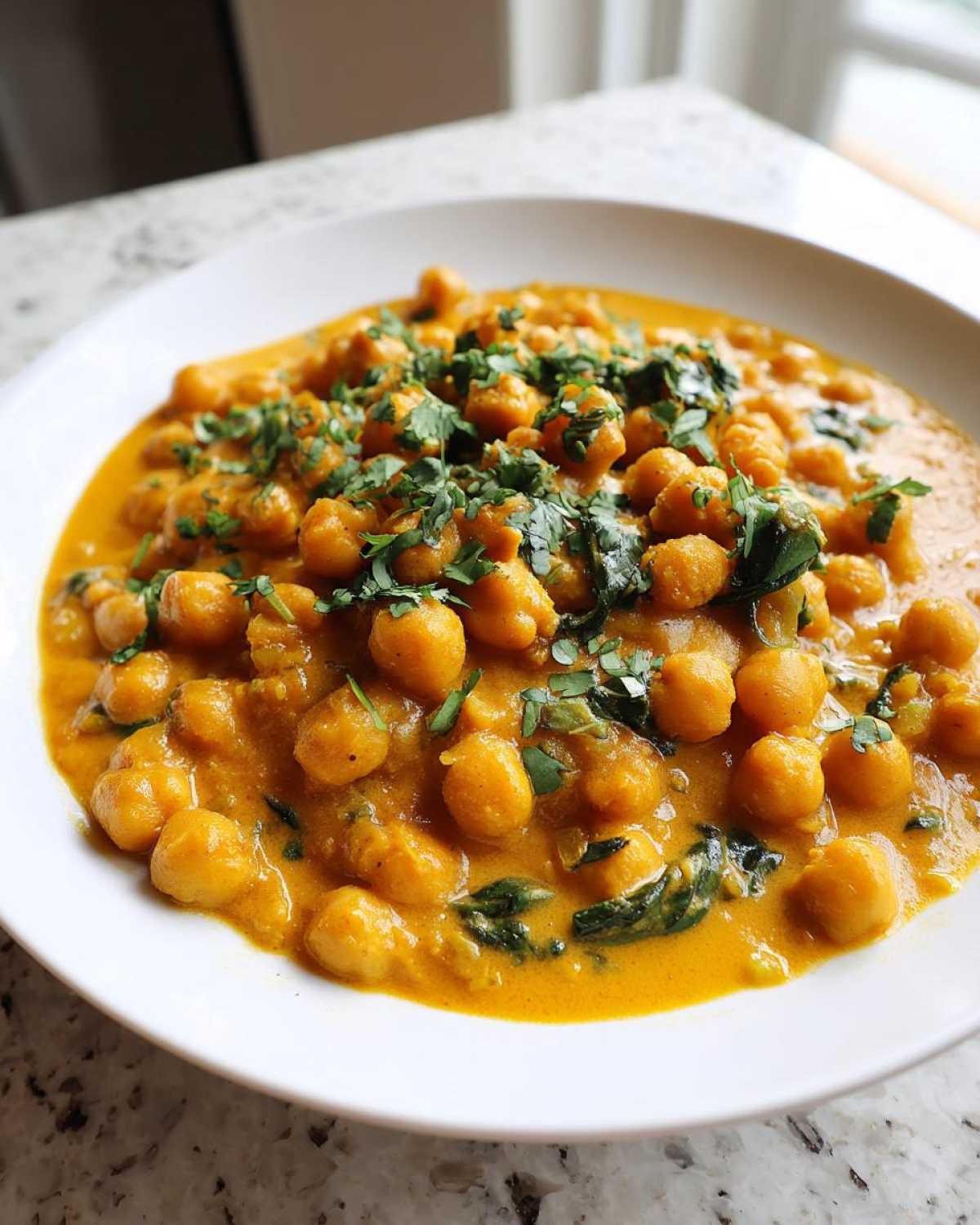
Storage and Reheating Instructions for Leftover Vegetarian Chickpea Curry with Coconut Milk
The very best part about making a big pot of this Vegetarian Chickpea Curry with Coconut Milk? The leftovers are even better the next day! Seriously, the spices have more time to settle in and deepen overnight, making it even more flavorful than when it was fresh. Store any extras in an airtight container in the fridge for up to four days. That’s four days of easy lunches or another simple weeknight vegetarian cooking sorted!
When it’s time to eat those leftovers, I really suggest reheating it gently on the stovetop over medium-low heat. Sometimes the coconut milk can thicken up a lot when it chills, so you might need to splash in just a tiny bit of water or extra coconut milk to get it back to that perfect consistency. If you’re in a huge rush, the microwave is fine, just stir it halfway through so it heats evenly through its creamy depths!
Frequently Asked Questions About This Coconut Milk Chickpea Recipe
I always get a ton of questions when people try this recipe for the first time, especially when they’re looking to make sure it fits their lifestyle! It’s such a fantastic base recipe, so don’t hesitate to tweak things, but here are the answers to what I hear most often about this best vegan curry recipe.
Is this recipe suitable for a Quick Vegan Dinner?
Absolutely! This is hands-down one of my go-to meals when I need a Quick Vegan Dinner on the table fast. Since we’re using canned chickpeas and simple pantry spices, your active time is maybe 15 minutes total, and the whole thing is done in about 35 minutes. It’s hearty, completely vegan, and tastes like you spent all afternoon simmering it, which is the best kind of cooking trick, right?
Can I use low-fat coconut milk in this Vegetarian Chickpea Curry with Coconut Milk?
Now, I know low-fat options look tempting on the shelf, but for this specific Vegetarian Chickpea Curry with Coconut Milk, I really, really have to insist on using full-fat. Remember how we’re talking about that luxurious, thick, creamy texture? That richness comes from the fat content, and if you use the low-fat version, you end up with more of a thin, watery soup rather than a stew. Stick to the full-fat can for the best results—it’s worth it for that authentic, coating mouthfeel.
What if my curry seems too thin even after simmering?
Don’t worry about it for a second! It happens, especially if your diced tomatoes were particularly watery that day. If you feel like you need to thicken this beyond just letting it simmer uncovered (which I mentioned in the tips), you can always use a slurry. Just mix one tablespoon of cornstarch with two tablespoons of cold water until it’s smooth. Take your curry off the heat, whisk that slurry in gently, and then bring it back to a very low simmer for just a minute or two. It thickens up wonderfully without changing the flavor profile at all!
How much heat does this recipe actually have?
When I list 1/4 teaspoon of cayenne pepper, I’m aiming for just a tiny little warmth on the back end, not a five-alarm fire. It adds depth, not pain! If you are very sensitive to spice, definitely leave it out. If you love it hot, double the cayenne, or better yet, add a pinch of red pepper flakes along with the garam masala at the very end. That way, you can taste-test a spoonful first before you commit to that extra heat!
Nutritional Estimates for This Meal
I always like to give everyone a heads-up on what they’re digging into when they make this Vegetarian Chickpea Curry with Coconut Milk. While this recipe is certainly healthier than many takeout options, every kitchen measurement varies slightly, so take these numbers as a really good starting point!
These estimates are based on one serving, assuming you’re making the full yield of four bowls. Remember, the majority of the fat content here is coming from that delicious full-fat coconut milk, which gives us all that incredible flavor, so just keep that in mind!
- Serving Size: 1 serving
- Calories: 450
- Fat: 25g
- Saturated Fat: 20g
- Unsaturated Fat: 5g
- Trans Fat: 0g
- Cholesterol: 0mg (Fantastic for keeping things heart-healthy!)
- Carbohydrates: 50g
- Fiber: 12g (Hello, happy digestion!)
- Protein: 15g
- Sugar: 8g
- Sodium: 450mg
It’s important to know that these numbers are just estimates, and if you use low-sodium chickpeas or low-fat coconut milk (which I don’t recommend, but you might!), your totals will change. I always source my own ingredients, so I tweak my final numbers based on the specific brands of canned tomatoes and spices I use. Enjoy knowing you’re getting a whole lot of fiber and protein in this truly satisfying meal!
PrintCreamy Coconut Chickpea Curry
A simple recipe for a flavorful, creamy vegetarian curry using chickpeas and coconut milk.
- Prep Time: 10 min
- Cook Time: 25 min
- Total Time: 35 min
- Yield: 4 servings
- Category: Dinner
- Method: Stovetop Simmering
- Cuisine: Indian Inspired
- Diet: Vegan
Ingredients
- 1 tablespoon coconut oil
- 1 large onion, chopped
- 2 cloves garlic, minced
- 1 tablespoon fresh ginger, grated
- 1 teaspoon ground cumin
- 1 teaspoon ground coriander
- 1/2 teaspoon turmeric powder
- 1/4 teaspoon cayenne pepper (optional)
- 1 (14.5 ounce) can diced tomatoes, undrained
- 1 (13.5 ounce) can full-fat coconut milk
- 2 (15 ounce) cans chickpeas, rinsed and drained
- 1 teaspoon salt, or to taste
- 1/2 teaspoon garam masala
- 2 tablespoons fresh cilantro, chopped (for garnish)
Instructions
- Heat the coconut oil in a large pot or Dutch oven over medium heat.
- Add the chopped onion and cook until soft, about 5 minutes.
- Add the minced garlic and grated ginger. Cook for 1 minute until fragrant.
- Stir in the cumin, coriander, turmeric, and cayenne pepper. Cook the spices for 30 seconds, stirring constantly.
- Pour in the diced tomatoes and the coconut milk. Bring the mixture to a gentle simmer.
- Add the rinsed chickpeas and salt. Stir well to combine.
- Reduce the heat to low, cover the pot partially, and let the curry simmer for 15 minutes, allowing the flavors to meld.
- Stir in the garam masala during the last 2 minutes of cooking.
- Taste and adjust salt if needed.
- Serve hot, garnished with fresh cilantro.
Notes
- Serve this curry over basmati rice or with warm naan bread for a complete meal.
- For extra vegetables, add one cup of frozen spinach or diced sweet potato during step 4.
- If you prefer a thicker curry, remove the lid during the last 5 minutes of simmering.
Nutrition
- Serving Size: 1 serving
- Calories: 450
- Sugar: 8
- Sodium: 450
- Fat: 25
- Saturated Fat: 20
- Unsaturated Fat: 5
- Trans Fat: 0
- Carbohydrates: 50
- Fiber: 12
- Protein: 15
- Cholesterol: 0