

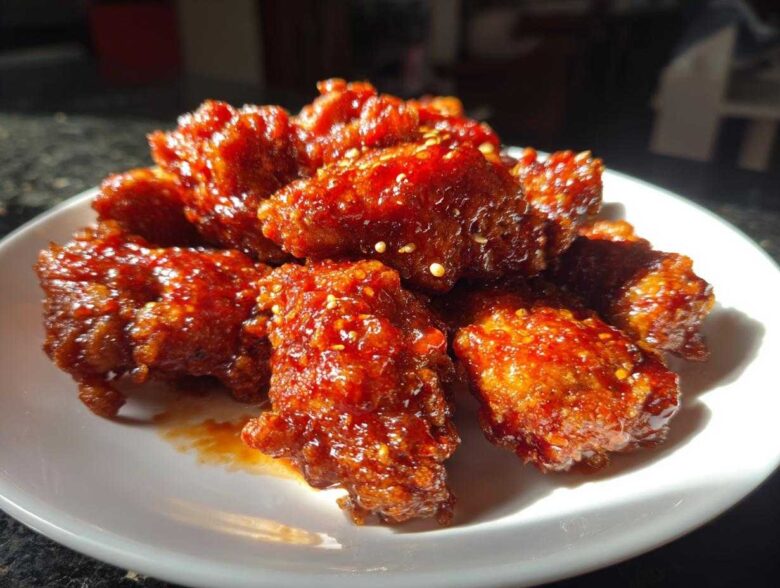
Okay, listen up, because I am finally sharing something truly dangerous: my absolute, rock-solid, unbelievably crispy **korean fried chicken recipe**! Forget sad, soggy takeout chicken because we are going straight for that shatteringly crisp exterior that just cracks when you bite into it. Seriously, the first time I made this using the double-fry method, I nearly cried because it was *that* good—restaurant quality right here on my stovetop. This isn’t just a recipe; it’s a technique guide designed to give you crunchy, juicy results every single time. Best of all? I’m giving you two sauces: the fiery classic Gochujang glaze and a milder, savory Soy Garlic. Get ready for your weeknight dinners to become legendary! If you want to know more about my kitchen philosophy, check out my story here.
Why This Korean Fried Chicken Recipe Delivers the Best Crunch
You’re probably wondering what the big deal is. Why can’t I just use regular flour? Well, trust me on this one—the secret to that amazing, light cage around the meat is all about physics and starch! This method is designed specifically to give you that **Juicy Inside Crispy Outside Chicken** you dream about. It’s all about prep and a two-part frying event.
- Pat the chicken bone dry—I mean, *really* dry. Get rid of every speck of surface moisture!
- Embrace the double fry. It’s non-negotiable for restaurant results.
- Don’t skip the baking powder; it helps create those tiny, airy blisters in the crust.
Achieving the Ultimate Homemade Fried Chicken Crunch
My biggest tip for the **Homemade Fried Chicken Crunch** is the starch. Forget using just flour! Flour absorbs too much oil too fast, leading to heavy, sleepy coatings. We rely on potato starch, or cornstarch in a pinch, because it creates a much lighter, almost glass-like crust that resists moisture absorption. When you double-fry it, that starch hardens into a shell. It’s incredible!
Essential Ingredients for Your Korean Fried Chicken Recipe
Alright, let’s assemble our arsenal! Getting the right ingredients is half the battle won before we even turn on the stove. I’ve broken everything down by what it feeds—the chicken itself, the fiery sauce, or the savory one. Remember, quality matters here, especially with the starches and peppers!
For the chicken coating, you need the basics: all-purpose flour, salt, pepper, and that essential baking powder. But the magic is in the starch—use potato starch if you can find it! It makes the biggest difference in texture. We keep the chicken pieces small, usually wings or boneless thighs, about two pounds total.
Then we move to the sauces. The **Gochujang Glazed Chicken** needs that gorgeous fermented chili paste, honey for shine, and a little tang from vinegar. For the **Soy Garlic Fried Chicken** option, we stick to classic deeply savory flavors with brown sugar and rice wine (mirin).
Ingredient Notes and Substitutions for Crispy Chicken Recipe
Here’s where I share the behind-the-scenes secrets about what keeps the batter working! First, the wet for the batter—you must use ice-cold water. Why, you ask? Cold water hitting hot oil creates instant steam pockets, puffing up that coating just a little more. It’s key for that authentic look!
When it comes to the Gochujang, if you can’t find it, you’re going to struggle to get that true Korean flavor profile, so I highly recommend hunting it down at an Asian market. Don’t substitute it with Sriracha; it just won’t have the depth. If you absolutely have no mirin for the Soy Garlic glaze, a tiny bit of sweet white wine cooked down with a pinch of sugar can work, but mirin is really preferred for that classic savory sweetness.
Pro tip: For the glazes, always use honey or corn syrup rather than granulated sugar if you can. They remain liquids even when heated, which helps the sauce coat the chicken beautifully instead of crystallizing too hard when it cools down a bit.
Step-by-Step Instructions: How to Make Korean Fried Chicken
Now for the action! This is where we turn those beautifully prepped chicken pieces into golden nuggets of crispy deliciousness. Remember what I told you about moisture? Start by patting everything *aggressively* dry with paper towels—seriously, they should come out steaming dry before they hit the batter. Once they are dry, dunk them quickly in the egg/water mix, let the excess drip off, and then toss them hard into the dry dredge.
Here’s a crucial trick that makes this recipe work better than others: after dusting them, use your hands to press that coating gently but firmly onto the chicken pieces. We want maximum surface area contact for that beautiful crust! Once coated, we go straight to the first fry. Don’t let them sit around looking pretty, or the coating will start getting gummy.
Make sure you have your oil ready to go beforehand. Temperature control is everything, so having a thermometer isn’t just helpful; it’s mandatory if you want the best results. Also, don’t crowd that pot, or the oil temperature drops instantly, and that’s when your chicken gets greasy. Remember to check out my disclaimer regarding deep-frying safety before you start!
Mastering the Double Fried Chicken Technique
This is the cornerstone of the entire **Double Fried Chicken Technique**, so pay attention! We fry in two stages for two totally different reasons. The first fry—we keep the oil temperature down around 325°F (160°C). This slow bath is just to cook the chicken all the way through to the bone or center without burning any coating. Fry them for about 8 to 10 minutes until they look pale gold. Then, pull them out! You absolutely must let them rest for at least 15 minutes on a wire rack. This rest period lets internal moisture escape. Seriously, don’t skip this! When you are ready for the final crunch, crank that oil up high to 375°F (190°C). Toss them back in quick—just 2 or 3 minutes. This super-hot, short fry blasts the outside into that ultimate, brittle crunch texture we love.
Preparing the Gochujang Glazed Chicken Sauce
Once your chicken is resting after its first soak, get your **Sweet and Spicy Korean Chicken** glaze started! Seriously, the aroma when this simmers up is intoxicating. You are just combining the Gochujang, soy sauce, honey, vinegar, garlic, and sesame oil in a small saucepan. Bring it up to a gentle simmer over medium heat—not a rolling boil—and let it bubble happily for about three minutes. You want it to thicken just enough that it coats the back of a spoon nicely. As soon as it smells savory and sweet, take it off the heat immediately! It thickens more as it cools, and we need it pliable for tossing.
Making the Soy Garlic Fried Chicken Glaze
If you prefer something less fiery, this glaze is just as addictive! It’s all about deep, dark umami. Combine the soy sauce, brown sugar, mirin, garlic, and ginger in a separate little pot. Just like the spicy one, we heat this gently until the sugar is fully dissolved and the sauce looks glossy and just starts to cling together. You are looking for perfect coating consistency, so don’t let it reduce too much or it will become candy-hard on your chicken! As soon as it coats the back of a spoon, it’s done and ready to dress those crispy pieces.
Tips for Restaurant Style Korean Chicken Success
You’ve mastered the double-fry, but now we need to keep that beautiful crust happy while you finish the rest of the batch! My secret for keeping things hot and crisp when making a large amount—perfect for **Game Day Chicken Recipes**—is simple: use a wire rack set over a baking sheet that you’ve rested in a very low oven, maybe 200°F (95°C). Don’t cover them! Trapped steam is the enemy of crispness. Just let the warm air circulate around them.
Also, when you toss the chicken in the sauce, you have to be lightning fast. Seriously, toss it and serve it immediately. The sauce is hot and wet, and it will attack that crisp crust immediately. If you’re making a huge amount, glaze only the portion you are about to serve right then. For the glaze itself, add a pinch more salt to the Soy Garlic if you’re serving it with blander rice because the starch might mute the flavor slightly. Trust me, these little tweaks are how you go from good home cooking to **Restaurant Style Korean Chicken**!
Serving Suggestions for Your Korean Fried Chicken Recipe
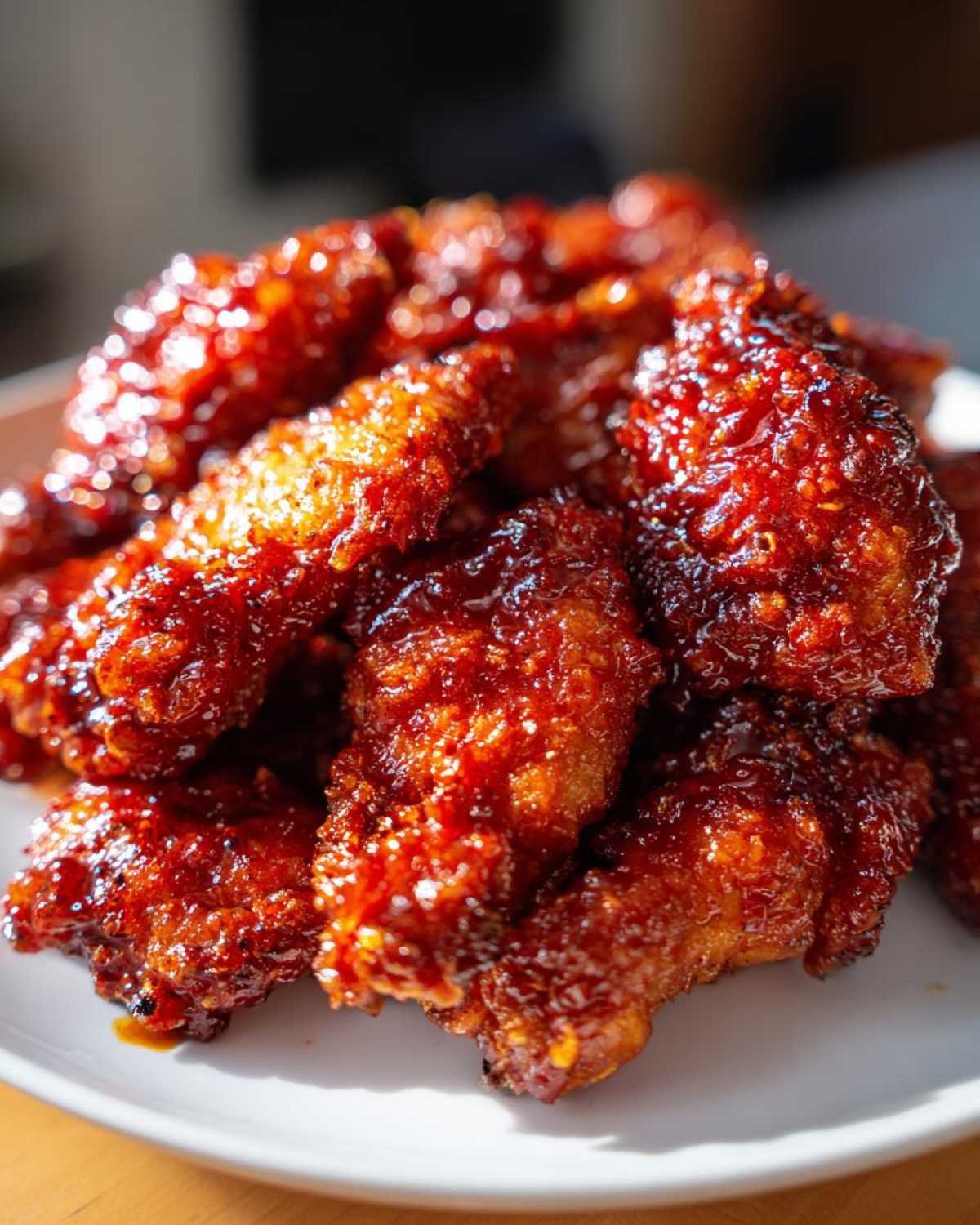
Okay, the chicken is glazed, it’s crunchy, and it’s ready to be the star of the show! But what do we serve this glorious **Finger Licking Good Chicken** with? You need sides that cut through that richness—something tangy or cool to balance out the spice and the fat. This is where we turn a great snack into a complete **Asian Chicken Dinner Ideas** spread.
My absolute must-have pairing is pickled radish, or *danmuji*. That bright, vinegary crunch is the perfect palate reset between bites of savory sweet chicken. If you buy the pre-cut jars, just drain them well and serve them cold! It works wonders.
If you are keeping things super simple, just grab some plain, fluffy steamed white rice. The rice soaks up any leftover glaze perfectly, and honestly, sometimes you just want the chicken to shine on its own. A little sprinkle of toasted sesame seeds over the top of the chicken always looks amazing, too. Serve it immediately while it’s blistering hot!
Storing and Reheating This Crispy Chicken Recipe
So, what happens when you managed to have leftovers? Because let’s be honest, sometimes even the best recipe can’t be consumed in one go, even if you wish it could! Storing this ultra-crispy chicken is all about managing moisture. If you put it straight into a closed container while it’s still warm—even with that great glaze—you are basically steaming it, and that heavenly crunch will vanish. Don’t do it!
For storage, the key is air circulation. If you have any leftover crispy pieces, let them cool completely on a plate or a wire rack until they are totally room temperature—no cheating here! Then, move them into a shallow, breathable container. I usually use a big Tupperware container lined with a paper towel, and I put a paper towel on top too, just to catch any lingering condensation. An airtight seal is your enemy here. This helps it last about two or three days max in the fridge.
Now for the resurrection—reheating this amazing **Crispy Chicken Recipe** is where we save the day. Forget the microwave completely! Microwaves just turn batter into sad, chewy rubber, and nobody wants that after all the effort we put into the double-fry.
Your Best Bet: The Air Fryer Revival
If you have an air fryer, pull that out immediately! It’s the absolute miracle worker for bringing back that “just-fried” texture. Set your air fryer to about 375°F (190°C). If your chicken is plain (no sauce), lay it in a single layer and let it blast for about 4 to 6 minutes. If it’s sauced with the Gochujang glaze, watch it closely, because the sugar content might make it darken fast—maybe only 3 or 4 minutes.
Oven Method for Larger Batches
If you’re reheating a huge batch for the family, the oven is your go-to. Preheat it to 400°F (200°C). Lay the chilled chicken pieces out on a baking sheet lined with foil or parchment (just for easier cleanup, since the sauce might be sticky). Pop them in for about 8 to 10 minutes, flipping halfway through. I usually turn the broiler on low for the last 60 seconds if they look a little dull, just to wake up that crispiness, but hover right there so you don’t burn the sauce!
The point is to use dry heat to evaporate any moisture that settled in while it was chilling. When they come out, they should snap again. This simple reheating process truly builds user trust because it shows you care about their entire eating experience, not just the initial cooking!
Frequently Asked Questions About the Korean Fried Chicken Recipe
I know that once you start tinkering with a recipe this good, questions always pop up! You want this to be perfect, just like the first time you made it, right? Hopefully, I’ve covered everything about achieving that amazing crunch and picking the right glaze, but here are a few things I hear people asking all the time.
Can I make Boneless Korean Fried Chicken Instead of Wings?
Absolutely, you can make **Boneless Korean Fried Chicken**! In fact, boneless thighs work incredibly well because they stay juicy, which is super important when you’re deep-frying. The main difference is the time. Wings are naturally smaller, so they cook faster. If you’re using boneless chicken breast chunks, they cook even quicker—maybe 7 minutes max in that first 325°F fry. Since they are smaller, you need to be extra vigilant during your checks so you don’t overcook them before they even get their chance in the second round! Thighs are my personal preference here because they handle the heat better than breast meat.
How do I prevent the sauce from making the chicken soggy?
This is the eternal struggle when moving from **Crispy Chicken Recipe** to glazed perfection! The key, which I stressed earlier, is the double fry and the RESTING period. That rest lets the moisture escape, making the crust sturdy. Number one rule: Toss the chicken in the glaze *right* before serving. Seriously, seconds before it hits the table. If you’re making a huge batch, use the low-oven warming trick I mentioned, and only glaze the portions you are physically eating immediately. Sugar-based sauces are sticky and delicious, but they will always try to soften the crust, so speed is your best friend!
What is the best oil for deep frying Korean Fried Chicken?
When you’re deep-frying, you need an oil with a high smoke point. I generally use neutral vegetable oil or canola oil because they are affordable and work perfectly for the high temperatures we need for this **Double Fried Chicken Technique**. Some folks swear by peanut oil for flavor, and that’s great if you don’t have allergy concerns! Whatever you choose, make sure you have enough of it—at least 3 inches deep in your pot—so the temperature doesn’t plummet the second the chicken hits the oil. Keeping that temperature stable is how you maintain that thin, shattering crust!
Can I use chicken breast for this recipe?
You can, but I honestly advise against it if you are new to frying. Chicken breast tends to dry out really fast under high heat, especially during that crucial second fry needed for maximum crispness. If you are committed to breast meat, cut the pieces small—think one-inch cubes—and reduce your first frying time significantly, maybe only 6 or 7 minutes at 325°F. Then, pull them out and check one for doneness. If they are already cooked through after the first fry, they only need about a minute in the second hot bath just to crisp up. Thighs or wings hold the juices much better, giving you a more forgiving window!
If you have any other burning questions about getting the perfect crunch or maybe you need to get in touch with me directly, feel free to head over to my contact page!
Nutritional Estimates for This Korean Fried Chicken Recipe
Okay, now we have to talk turkey—literally! Since this amazing **korean fried chicken recipe** involves deep-frying and a delicious sweet glaze, it’s definitely not the lightest **Easy Weeknight Asian Meal** you’ll ever make, but oh man, is it worth it for a special meal or weekend treat. I want to be super clear that these numbers are just estimates. I calculated them based on using chicken wings, the Gochujang glaze, and standard serving portions. You know how it is; every brand of Gochujang has a different sugar content, so results will vary!
When you look at these figures, remember that you are getting a huge hit of protein, and because we used potato starch, the crust isn’t as heavy as traditional flour batters. We used healthy unsaturated fats for frying, which helps a bit! You can see the full breakdown below. If you’re worried about sodium, I highly recommend opting for low-sodium soy sauce in your glazes to keep those levels down. For our full legal disclaimer on nutrition, you can always check the fine print here.
Serving Size: 1 serving (approx. 6 pieces)
- Calories: 550
- Fat: 30g (Hope you love those healthy fats we fried in!)
- Saturated Fat: 6g
- Carbohydrates: 40g
- Protein: 35g
- Sugar: 18g (That’s the glaze working its magic!)
- Sodium: 750mg (See the note above about low-sodium soy sauce if this number is too high for you!)
If you decide to make the Soy Garlic version, the sugar and sodium might shift slightly, but the overall structure remains pretty similar. It’s important to know what you’re eating, but don’t let numbers stop you from enjoying this crunchy masterpiece!
Share Your Best KFC Recipe Results
Whew! I’m so glad we finally walked through this whole **korean fried chicken recipe** together. My fingers are sticky just thinking about dunking one more piece in that Gochujang sauce! Now that you’ve gone through the double frying and mastered the crust, I am dying to know how it turned out for you. Did you feel that shatter when you took the first bite? That’s the sound of success!
Don’t be shy now—come back and drop a comment below. I want to know which glaze won your heart! Were you team Sweet & Spicy, or does that savory Soy Garlic always win out in your kitchen? And if you dared to try any variations on the seasoning or the batter, clue me in! We are all home cooks figuring this stuff out together.
If you managed to snap a picture of your perfectly golden, glazed pieces—I mean, those beautiful **Game Day Chicken Recipes** looking ready for the big screen—please share them with me! Tagging me on social media with pictures of your own **Finger Licking Good Chicken** honestly makes my week.
And hey, if anything tripped you up or you have a super-secret tip you discovered during the process, let me know! Learning from each other is the best way we can all keep leveling up our frying game. Remember to check out my site’s terms and conditions before digging into the comments section, and thanks again for trusting me with what I swear is the best fried chicken you’ll ever make at home!
PrintAuthentic Double-Fried Korean Fried Chicken Recipe
Make ultra-crispy Korean Fried Chicken at home using the double-frying method. This recipe includes instructions for both a classic Sweet & Spicy Gochujang glaze and a Soy Garlic glaze.
- Prep Time: 25 min
- Cook Time: 20 min
- Total Time: 45 min
- Yield: 4 servings
- Category: Dinner
- Method: Deep Frying
- Cuisine: Korean
- Diet: Low Fat
Ingredients
- 2 lbs chicken wings or boneless thighs, cut into bite-sized pieces
- 1 cup potato starch (or cornstarch)
- 1/2 cup all-purpose flour
- 1 teaspoon salt
- 1/2 teaspoon black pepper
- 1/2 teaspoon baking powder
- 1 large egg, lightly beaten
- 1/2 cup cold water
- Vegetable oil, for deep frying
- For Sweet & Spicy Glaze: 1/4 cup Gochujang, 2 tablespoons soy sauce, 2 tablespoons honey or corn syrup, 1 tablespoon rice vinegar, 1 tablespoon minced garlic, 1 teaspoon sesame oil
- For Soy Garlic Glaze: 1/4 cup soy sauce, 2 tablespoons brown sugar, 1 tablespoon mirin, 1 tablespoon minced garlic, 1 teaspoon grated ginger
Instructions
- Prepare the chicken: Pat the chicken pieces completely dry with paper towels. This step is crucial for crispiness.
- Make the dry dredge: In a large bowl, whisk together the potato starch, flour, salt, pepper, and baking powder.
- Make the wet batter: In a separate bowl, whisk the egg and cold water together.
- Coat the chicken: Dip the dry chicken pieces into the wet batter, letting excess drip off. Immediately toss the wet chicken pieces thoroughly in the dry dredge until fully coated. Press the coating onto the chicken lightly.
- First Fry: Heat about 3 inches of oil in a deep pot or Dutch oven to 325°F (160°C). Fry the chicken in batches for 8 to 10 minutes until lightly golden and cooked through. Do not overcrowd the pot. Remove and drain on a wire rack. Let the chicken rest for at least 15 minutes.
- Second Fry: Increase the oil temperature to 375°F (190°C). Fry the rested chicken again in batches for 2 to 3 minutes until deep golden brown and shatteringly crisp. Drain well on a wire rack.
- Prepare the glazes: For the Sweet & Spicy glaze, combine all glaze ingredients in a small saucepan. Simmer over medium heat for 3 minutes until slightly thickened. For the Soy Garlic glaze, combine ingredients and simmer for 3 minutes until sugar dissolves and the sauce thickens slightly.
- Toss: Place the hot, double-fried chicken in a large bowl. Pour your desired glaze over the chicken and toss quickly to coat evenly. Serve immediately.
Notes
- For the best crunch, use potato starch instead of just flour in the coating mixture.
- Do not skip the resting period between the first and second fry; this allows moisture to escape, resulting in a crispier crust.
- If you prefer a less spicy glaze, reduce the amount of Gochujang in the Sweet & Spicy sauce.
Nutrition
- Serving Size: 1 serving (approx. 6 pieces)
- Calories: 550
- Sugar: 18
- Sodium: 750
- Fat: 30
- Saturated Fat: 6
- Unsaturated Fat: 24
- Trans Fat: 0
- Carbohydrates: 40
- Fiber: 1
- Protein: 35
- Cholesterol: 110