

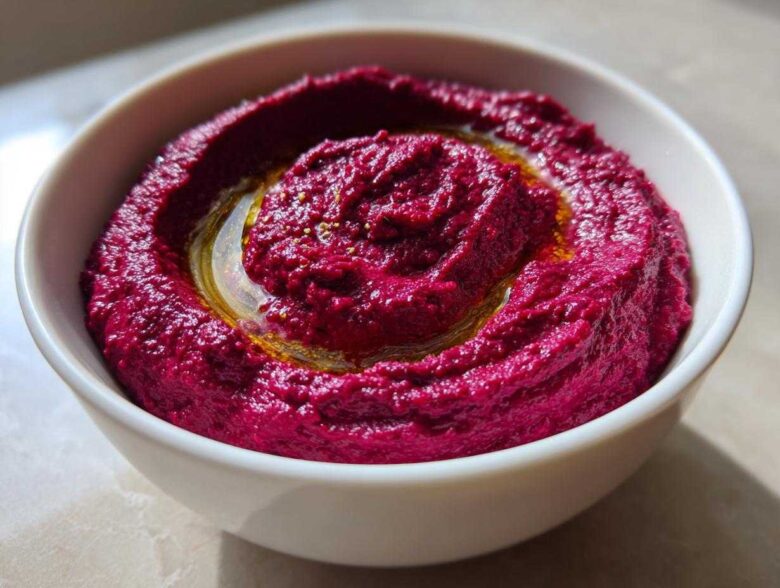
Oh my goodness, get ready for some color in your life! Seriously, when I first nailed this **Vegan Creamy Roasted Beet Hummus**, I almost couldn’t believe my eyes. It’s that shocking, gorgeous pink color that just screams “party starter.” But you know me—it’s not just about the looks; it has to taste incredible and, most importantly, it has to be velvety smooth!
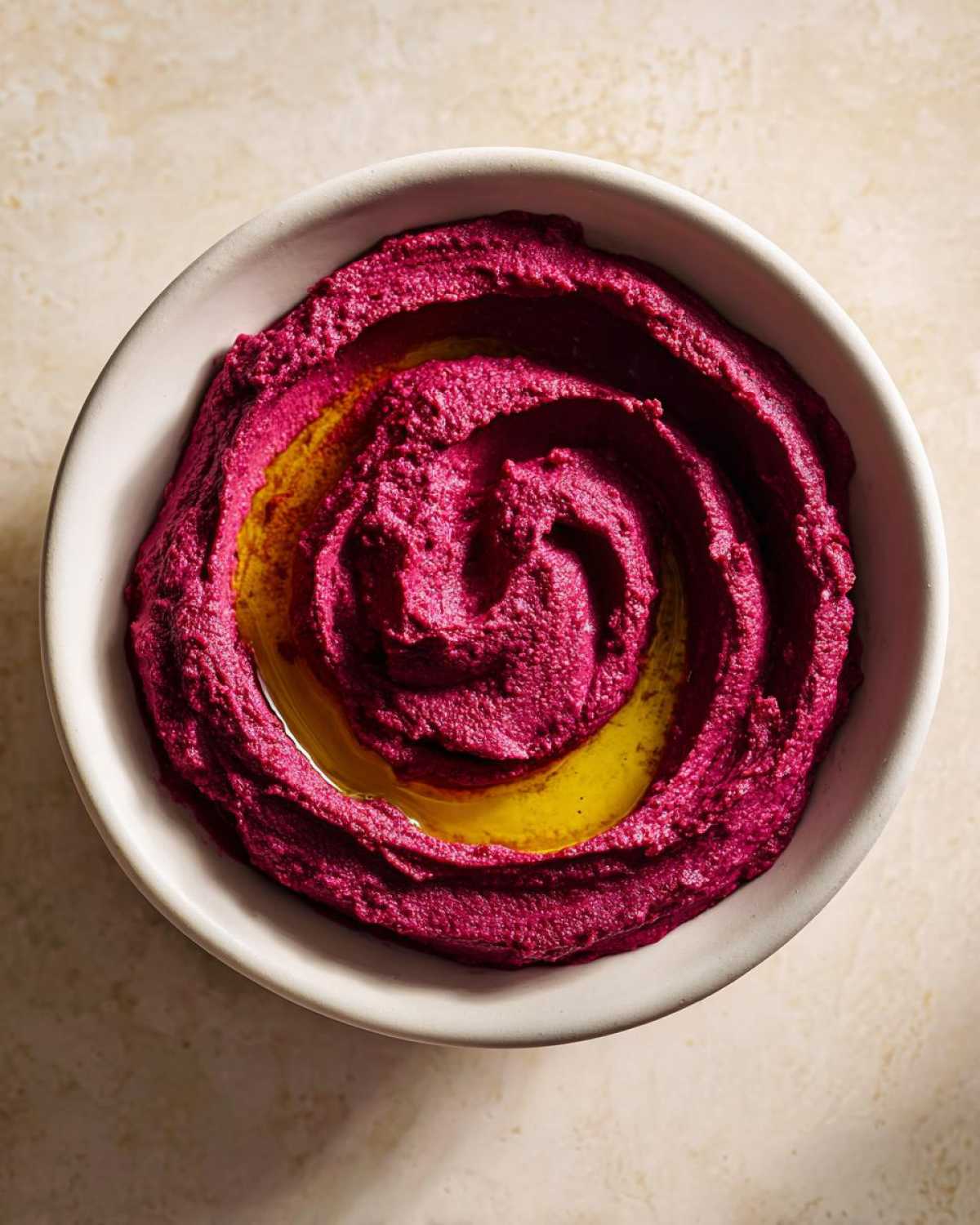
I spent ages trying to beat that grainy texture you sometimes get with homemade hummus, especially when adding something earthy like beets. Trust me, after a few flops, I figured out the secret to that ultra-creamy texture we all crave. This recipe right here is my ultimate, foolproof guide to the best, brightest, and smoothest vegan spread you’ll ever make. You’ll want to eat it with a spoon, I promise!
Since I started cooking this way, I’ve learned that paying attention to the details really pays off. You can learn more about my cooking philosophy over at my ‘About Me’ page, but for now, let’s get those beets roasting!
Why This Vegan Creamy Roasted Beet Hummus Stands Out
So, why should you choose my recipe over the hundred others out there? Because this isn’t just a dip; it’s an experience! We hit all the high points: it’s totally vegan, it has that show-stopping color, and most importantly, the texture is liquid silk. I had to figure out the science behind smooth blending, and I’m sharing all my tricks right here.
- It delivers that gorgeous, vibrant color naturally—no fake dyes allowed!
- It’s 100% dairy-free, making it the perfect **Dairy Free Appetizer** for everyone to enjoy.
- The texture is unbelievably creamy, which is, let’s be honest, the biggest hurdle with homemade hummus. We absolutely crush that part.
Achieving the Best Beet Hummus Texture
Texture is everything, right? If your hummus is gritty, you feel like you wasted your time. For this **Vegan Hummus Recipe**, we rely on two superstar ingredients working together: premium tahini and ice water. The good quality tahini needs to be super smooth itself; that’s Lesson One. Then, as we blend, slowly drizzling in that ice water whips everything into an emulsified, airy dream. It’s the simplest way to guarantee a **Smooth Hummus Technique**.
Naturally Vibrant and Delicious Roasted Beet Dip
Roasting is non-negotiable here! When you roast the beets, you concentrate that sweet, earthy flavor, removing all that raw bitterness. It marries so beautifully with the salty tahini and bright lemon. Seriously, the resulting **Roasted Beet Dip** is addictive. It’s the perfect centerpiece for any gathering, turning a standard snack into a stunning **Bright Pink Dip** that everyone will be talking about.
Essential Ingredients for Vegan Creamy Roasted Beet Hummus
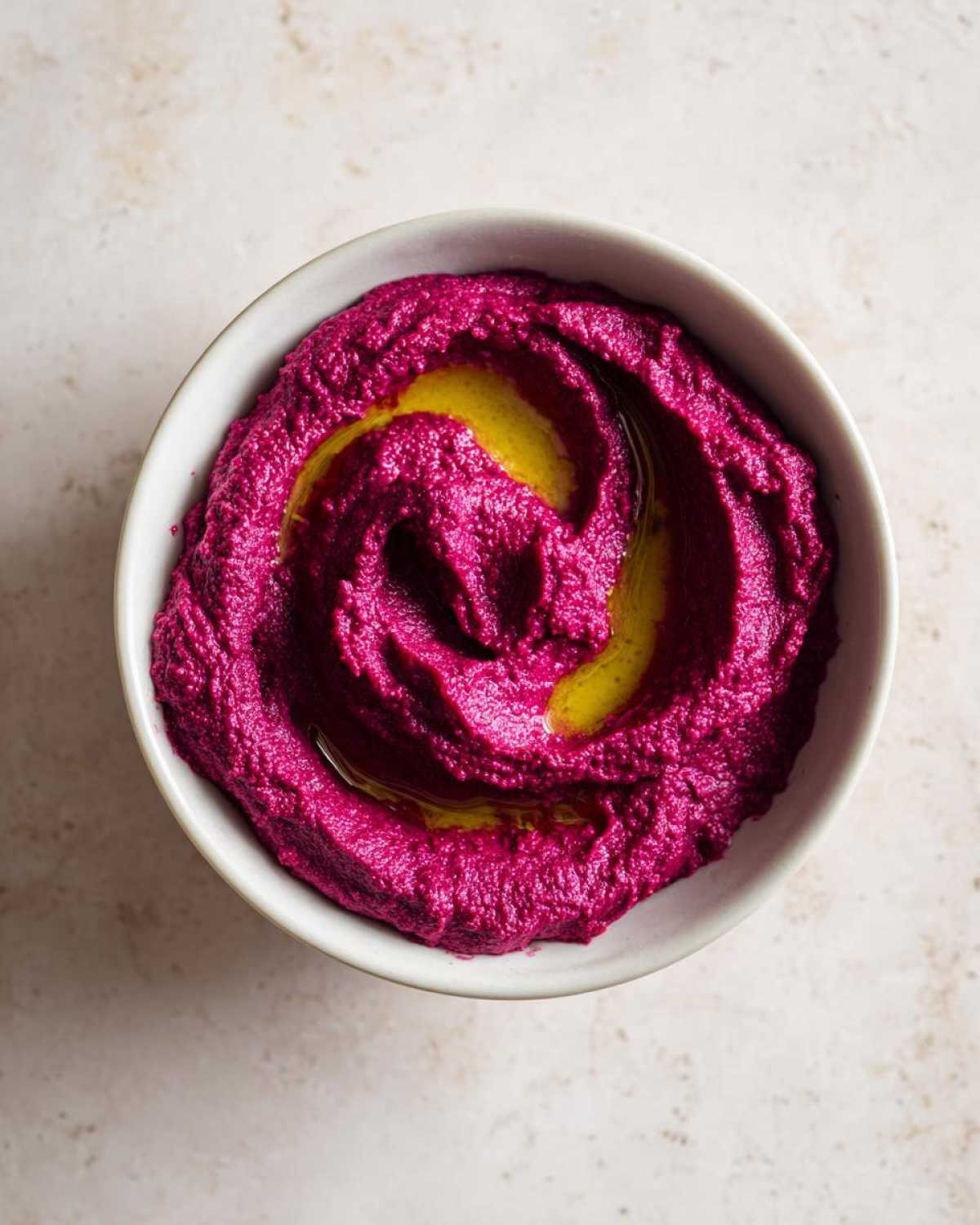
Alright, let’s talk about what goes into this magical, colorful dip! Getting the ratios right here is what separates a good beet hummus from a truly great **Beetroot Dip**. You need the right balance of earthiness from the beets, the rich nuttiness from the tahini, and just enough acid to keep everything bright and poppy. Don’t worry, I’ve listed out everything we need below so you can just grab and go. It’s a short list, which I love, because simple ingredients shine when they’re high quality!
Before you start gathering everything, remember that you can check out my recipe for amazing pesto hummus if you want another flavor adventure soon!
- 2 medium beets (Aim for about 1 pound total—that’s where the color comes from!)
- 1 (15-ounce) can chickpeas, make sure you rinse and drain them well.
- 1/4 cup tahini—go for the runny kind!
- 2 tablespoons fresh lemon juice—absolutely must be fresh!
- 1 small clove garlic (We’re keeping it mild here, but you can always add more later.)
- 2 tablespoons olive oil, plus more for drizzling on top later.
- 1/2 teaspoon salt (Start here, you can always add more at the end.)
- 1/4 teaspoon ground cumin (This tiny bit adds so much warmth!)
- 2-4 tablespoons ice water (Keep this ready—it’s our secret weapon!)
Ingredient Notes and Substitutions for Your Roasted Beet Hummus
Listen up, because these small details change the game for your **Healthy Chickpea Recipe**. First thing: don’t try to peel those beets before roasting! Wrap them up tight in foil and roast them whole. Once they’re tender and cool enough to handle, the skins just slip right off—it’s amazing how easy it is. If you try to peel them raw? Forget about it; you’ll lose half the beet to your peeler!
Next, the tahini quality really matters for this **Creamy Vegan Spread**. If yours looks dry or rock-hard at the top, stir it really well before measuring. If you’re trying to figure out how to make creamy hummus and you don’t have ice water, you can absolutely use some of the liquid you saved from draining the chickpeas (aquafaba!). It works in a pinch, but I find that the shock of *ice* water helps the hummus lighten up even more.
Step-by-Step Instructions for Your Vegan Creamy Roasted Beet Hummus
Okay, now we get to the fun part—actually making the dip! Follow these steps exactly, and I guarantee you’ll get that perfect, smooth finish every time. I know it takes a little patience with the roasting, but that’s where all the intense flavor comes from. Once they’re done, the rest is just tossing things into the food processor and watching the magic happen. Remember to trust the process, especially when we add the water!
Roasting the Beets for Deep Flavor
First up, we need to treat our beets right. Preheat your oven up to 400 degrees Fahrenheit (it needs to be hot!). Take your two medium beets, wash them up, and wrap them tightly—I mean *tightly*—in aluminum foil. We are steaming them in their own juices here! Pop them in the oven for about 45 to 60 minutes. You’ll know they are done when you can easily poke them with a fork all the way through—if it resists, give it another ten minutes. Let them cool down just enough so you don’t burn yourself, but while they are still warm. This is key: the skins should practically slide right off when you rub them with a paper towel. Chop those lovely purple jewels up roughly when they’re peeled.
Blending Technique for Smooth Hummus Technique
Time to hit the food processor! Put the chopped roasted beets, the drained chickpeas, your tahini, the fresh lemon juice, that small garlic clove, olive oil, salt, and cumin into the bowl. Pulse it a few times to start breaking everything down. Next, this is the most important part for achieving that incredible Smooth Hummus Technique: turn the machine on and start dribbling in that ice water, one tablespoon at a time. Keep adding it slowly until you see the mixture literally transform. We are aiming for gorgeous, flowing, absolutely decadent smoothness—that’s the **Smooth Hummus Technique** shining through!
Tips for Achieving the Ultimate Creamy Vegan Spread
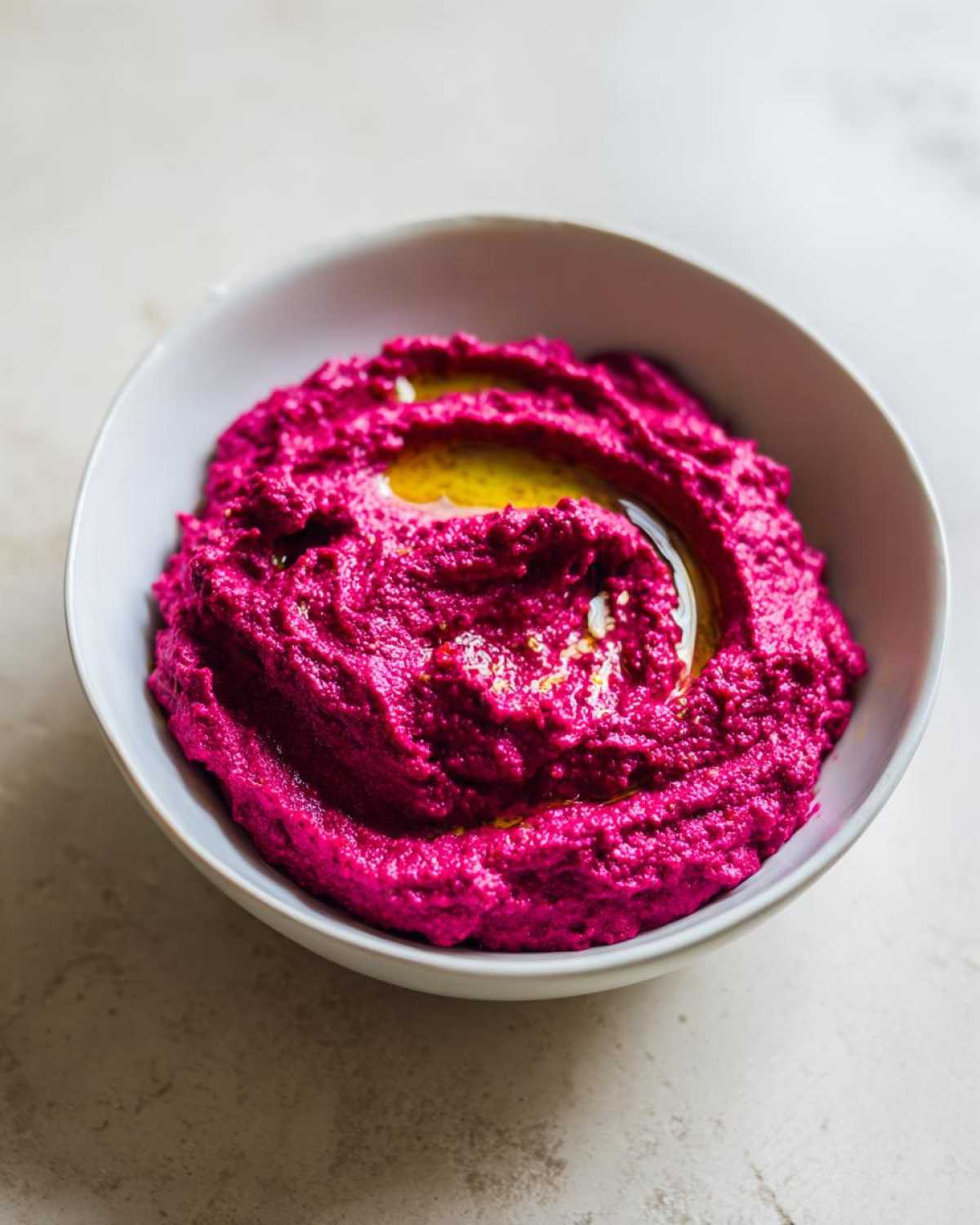
Okay, we talked about the ice water step, but let’s really dive deep into texture because I know that’s what you’re after—that unbelievably luxurious, totally **Creamy Vegan Spread** that rivals anything you’d buy in a tub.
If you have one of those heavy-duty, high-powered blenders—you know the kind I mean—use it! A serious workhorse of a blender can take the mixture to a cloud-like consistency that my regular food processor can only dream of reaching. You need that raw power to truly break down those chickpea skins and beet fibers.
But even if you’re using a standard food processor like I often do, the rule is simple: patience! When you think it looks smooth enough, scrape down the sides, and then let it run for another minute. Seriously! Keeping that machine going, adding that cold water a little slowly as it whirls, really emulsifies the olive oil and tahini into the mix. It’s almost like magic how that happens. Don’t give up early; push past the point where you think it’s done!
I read about some folks adding tiny bits of baking soda when they make regular hummus, but I skip that here since the beets react differently. Instead, I focus on the temperature and the blending time, just like when making the perfect overnight oats for the best texture. A great spread relies on patience and temperature control!
Also, if you’re using canned chickpeas, try rinsing them really, really well. Sometimes the leftover starchy liquid can mess with the smoothness, even if we reserve some as aquafaba later. Clean ingredients lead to a cleaner, creamier finish, plain and simple!
Serving Suggestions for Your Vegan Creamy Roasted Beet Hummus
Now that you have this stunning, vibrant dip, the only thing left is showing it off! This **Dairy Free Appetizer** is so gorgeous, you almost don’t want anyone to touch it—but that would defeat the purpose, right?
The presentation is honestly half the fun. You want that stunning, deep magenta color to really pop. Use a shallow bowl—not too deep—so you can create a nice swirl on top. A generous drizzle of good quality olive oil right before serving is crucial; it catches the light and makes the color look even richer. It’s practically begging for a moment in the spotlight!
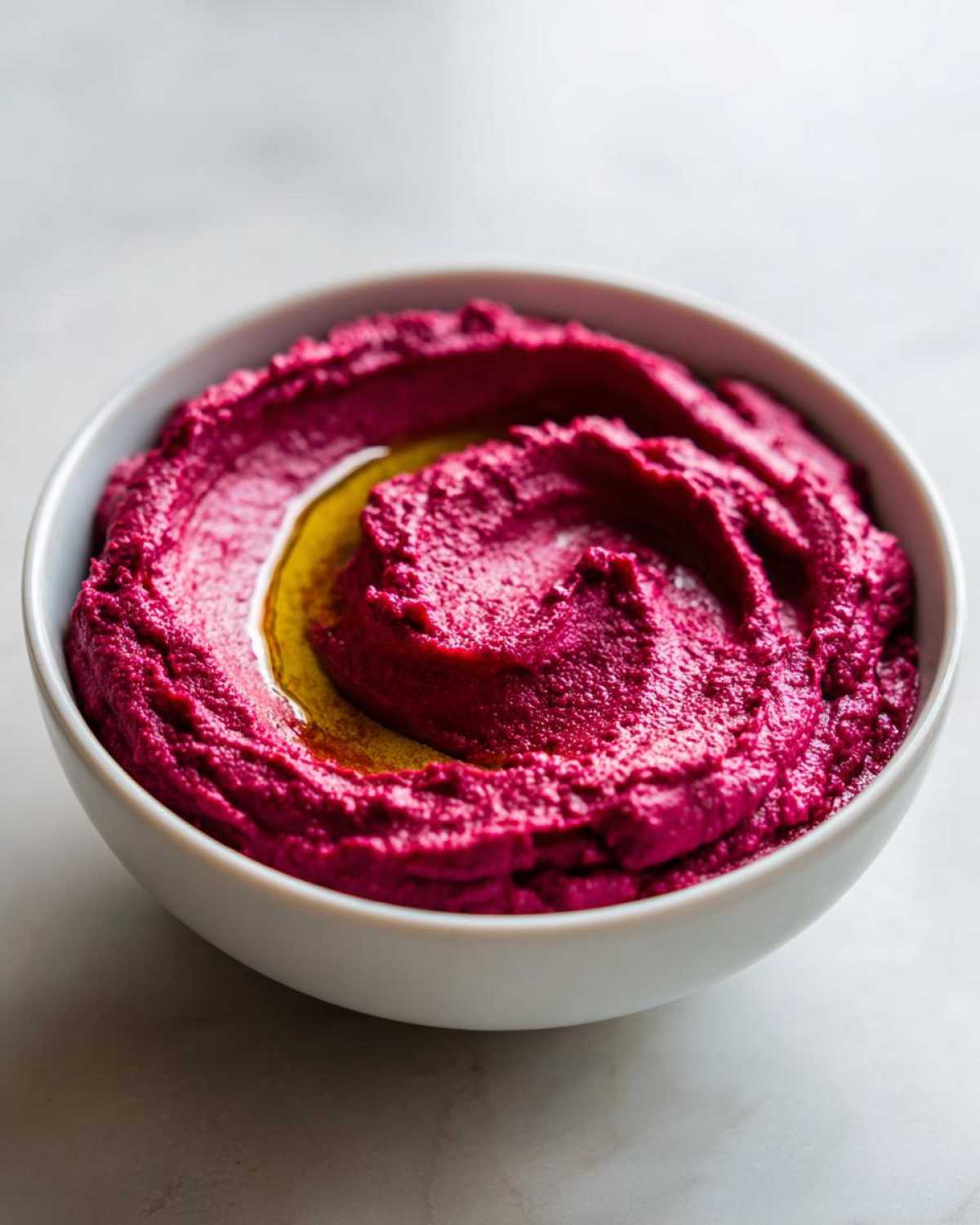
When thinking about what to serve alongside it, I love keeping things simple so the beet flavor can really shine. Of course, warm pita bread is a classic winner. If you’re entertaining, have a tray ready with lots of crisp crudités—think crunchy cucumber spears, carrot sticks (ha! More carrots!), and maybe some bell pepper strips in yellow or orange to contrast that beautiful pink.
If you feel like baking bread yourself, check out my recipe for classic French bread; slicing that thick and crisp for dipping is seriously heaven. For something crunchy, standard water crackers or even some toasted sourdough slices work beautifully. If you are taking photos of your creation before you devour it, remember to use natural light! That’s your ticket to great **Vibrant Food Photography** and showing off the natural beauty of this dip.
Storage and Reheating Instructions for Homemade Beetroot Dip
So, you made this amazing dip, and now you have leftovers! That’s the best kind of problem to have, isn’t it? Good news: this **Homemade Beetroot Dip** keeps really well, but because of the roasted vegetables and fresh lemon juice, we need to treat it right in the fridge.
You can absolutely store any extra **Vegan Hummus Recipe** in an airtight container. I usually line the top with a tiny piece of plastic wrap pressed right against the surface of the dip before sealing the lid, just to keep the air away from it. If you do that, it stays wonderfully fresh in the refrigerator for up to 4 days. That means you have built-in snacks for the whole work week!
Now, here’s the thing you need to watch out for: when hummus chills down in the fridge, it’s going to thicken up. It goes from that beautifully pourable texture we worked so hard to achieve earlier to something a little stiff. It’s totally normal! Don’t panic and think you ruined it.
Before you serve the leftovers, just give it a little TLC. Take it out about 15 minutes before you plan on eating it to let it warm up slightly toward room temperature. Then, add just a tiny splash—maybe half a teaspoon—of cold water or even fresh lemon juice. Put it back into the food processor—or just whisk it really vigorously by hand—and pulse it for just a few seconds. That little bit of liquid will wake up the emulsion and bring back that beautiful, creamy texture almost instantly. It’s like giving your **Roasted Vegetable Dip** a quick refresh button!
Frequently Asked Questions About This Vegan Hummus Recipe
I love hearing from you all about how your dips turned out! People usually have a few burning questions once they get into the kitchen, especially when dealing with a colorful ingredient like beets. I’ve tried to gather the most common ones here to make sure your next batch of this vibrant spread is absolutely perfect. If you have more questions, pop over to my healthy chickpea recipe section for more general tips!
Can I make this Best Beet Hummus without roasting the beets?
Look, I get it—sometimes time is just not on our side! Roasting is my absolute top recommendation because it caramelizes the sugars in the beets, giving you that deep, mellow, earthy sweetness. Cooking them raw or just boiling them leaves them tasting a bit too bright and sometimes watery, which can really interfere with that essential creamy texture we worked so hard for.
If you are in a massive rush, you can try steaming them until tender, or even boiling them until they fork easily. But here’s my honest warning: when you boil them, they soak up water. That extra water means you *have* to use less ice water during blending, and you might end up with a thinner dip that struggles to hold its shape, completely ruining that thick, luscious consistency of the **Best Beet Hummus**.
Is this Creamy Vegan Spread gluten-free?
Yes! That’s one of the best parts about utilizing chickpeas as a base—the hummus itself is naturally gluten-free. Our main ingredients are beets, chickpeas, tahini, oil, and spices. No wheat, barley, or rye involved there, making it a fantastic option for anyone avoiding gluten!
However, you always have to be mindful of what you’re serving it *with*. If you pair it with standard pita bread or certain crackers, you’re bringing gluten into the picture. If you’re serving this as a **Creamy Vegan Spread** for a mixed crowd, just make sure you have some GF crackers or crisp veggies on the platter to keep everyone safe and happy!
Estimated Nutritional Data for Vegan Creamy Roasted Beet Hummus
I always like to give you guys a rundown of what you’re looking at nutrition-wise, just in case you’re tracking macros or counting calories for your favorite **Party Dip Ideas Vegan** spread. Since we are using whole vegetables and healthy fats from olive oil and tahini, this is a really wholesome appetizer choice!
Keep in mind, since we are making this from scratch, these numbers are just estimates based on the standard ingredient amounts. Exact values can shift depending on the brand of tahini you buy or how much oil you drizzle on top when you serve it. But for a standard 1/4 cup serving, here is what my estimates look like:
- Serving Size: 1/4 cup
- Calories: 180
- Fat: 10g
- Saturated Fat: 1.5g
- Carbohydrates: 20g
- Fiber: 6g
- Protein: 6g
- Sugar: 5g
- Cholesterol: 0mg
As you can see, this dip is packed with fiber from the chickpeas and beets, which is fantastic for keeping you feeling full longer! And zero cholesterol, which is always a win when you’re enjoying something rich and savory. It’s proof that the **Best Beet Hummus** can be both indulgent and good for you!
Share Your Bright Pink Dip Creations
Whew! If you made it through all those steps, you deserve a reward! Now that you’ve got this glorious, vibrant, and super creamy dip cooling down, I really want to know how it turned out! Don’t be shy—I absolutely love seeing your results.
Did you manage to get that ultra-smooth texture we talked about? Did the color steal the show at your party? Every time someone tells me they nailed the silky consistency, it makes my day! Please, please leave a comment below this recipe. Let me know what you served it with or if you added any secret twists to your blend.
And if you took a picture of your stunning **Bright Pink Dip** sitting on the appetizer table, I’d be thrilled if you shared it on social media! Tag me so I can see your beautiful work. It always inspires me to keep sharing these kitchen secrets with you guys. You can find me all over the place, but don’t forget to check out my main recipe blog for more fun, flavorful ideas!
Happy dipping, and thank you for trying out my favorite hummus!
PrintVegan Creamy Roasted Beet Hummus
A recipe for smooth, vibrantly colored hummus made with roasted beets, tahini, and chickpeas, resulting in a creamy vegan spread.
- Prep Time: 20 min
- Cook Time: 60 min
- Total Time: 80 min
- Yield: About 2 cups
- Category: Appetizer
- Method: Roasting and Blending
- Cuisine: Middle Eastern Inspired
- Diet: Vegan
Ingredients
- 2 medium beets (about 1 pound)
- 1 (15-ounce) can chickpeas, rinsed and drained
- 1/4 cup tahini
- 2 tablespoons fresh lemon juice
- 1 small clove garlic
- 2 tablespoons olive oil, plus more for serving
- 1/2 teaspoon salt
- 1/4 teaspoon ground cumin
- 2-4 tablespoons ice water (or reserved chickpea liquid)
Instructions
- Preheat your oven to 400 degrees Fahrenheit (200 degrees Celsius). Wrap the beets tightly in aluminum foil. Roast for 45 to 60 minutes, or until easily pierced with a fork.
- Allow the beets to cool slightly. Peel the skins off the beets; the skins should slip off easily. Roughly chop the roasted beets.
- Combine the peeled beets, drained chickpeas, tahini, lemon juice, garlic, olive oil, salt, and cumin in a food processor.
- Process the mixture until it starts to break down. Scrape down the sides of the bowl.
- With the food processor running, slowly add the ice water, one tablespoon at a time, until the hummus reaches a very smooth and creamy consistency. This step is key for texture.
- Taste and adjust salt or lemon juice as needed.
- Transfer the hummus to a serving bowl. Drizzle with olive oil before serving.
Notes
- For the creamiest texture, ensure you peel the beets after roasting and use ice-cold water when blending.
- If you prefer a milder garlic flavor, soak the peeled garlic clove in lemon juice for 10 minutes before adding it to the food processor.
- Store leftovers in an airtight container in the refrigerator for up to 4 days.
Nutrition
- Serving Size: 1/4 cup
- Calories: 180
- Sugar: 5
- Sodium: 250
- Fat: 10
- Saturated Fat: 1.5
- Unsaturated Fat: 8.5
- Trans Fat: 0
- Carbohydrates: 20
- Fiber: 6
- Protein: 6
- Cholesterol: 0